Pool foam causes and how to fix it (2026)
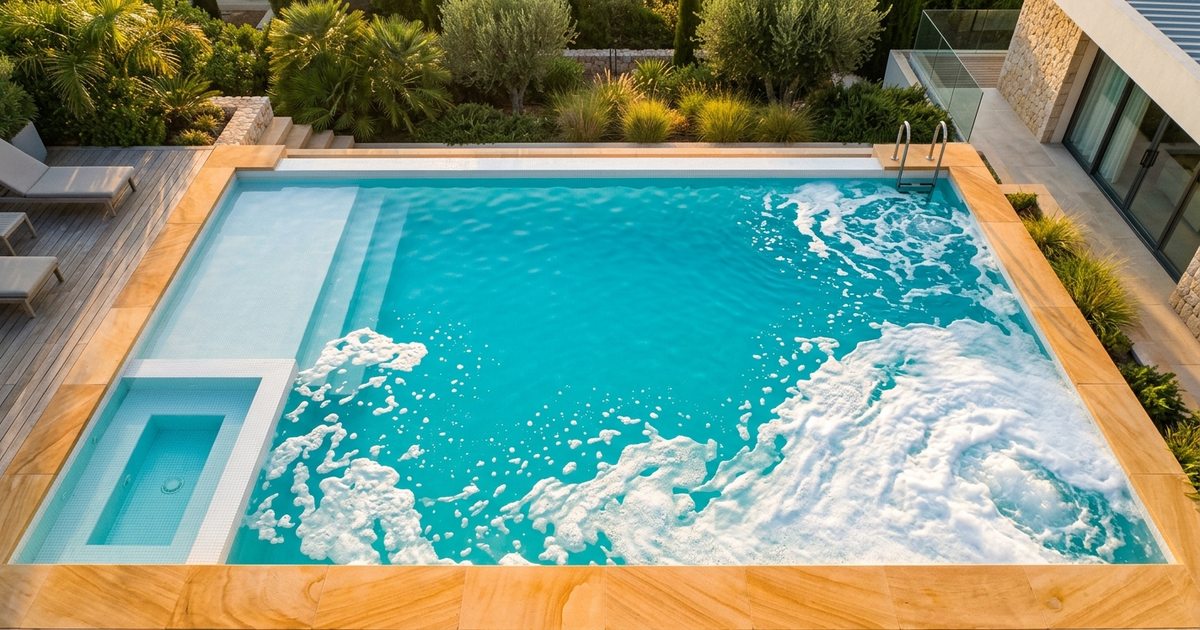
Foam in a pool is almost always caused by surfactants: body oils, sunscreen, laundry detergent residue rinsed out of swimsuits, or cheap quaternary ammonium algaecide. Chlorine does not remove it. The fast fix is a silicone defoamer (15 minutes), the real fix is an enzyme product over 3 to 7 days, and the permanent fix is figuring out which surfactant is getting into your water and cutting it off.
Pool foam is surfactants trapped in air bubbles. If it appeared after a pool party, the cause is human (body oils, sunscreen). If it appeared after dosing algaecide, the cause is the bottle you just opened.
If the foam appeared the morning after a pool party, the cause is human. If it appeared an hour after you dosed algaecide, the cause is the bottle you just opened. Diagnose first, then treat. This article walks through both.
What Pool Foam Actually Is
Foam is air trapped inside thin films of water. Clean pool water cannot hold a film, because surface tension snaps the bubble before it stabilizes. A surfactant is any molecule with a water-loving end and an oil-loving end. Add enough of them and they line up at the air-water boundary, lowering surface tension enough that bubbles persist. The pump returns, splashing, the waterfall feature, even a brisk wind across the surface: all of those introduce air. Without surfactants in the water, the air escapes immediately. With surfactants, you get a white head along the downwind edge of the pool.
Everything that causes pool foam is a surfactant. Soap is a surfactant. Sunscreen is a surfactant. Quaternary ammonium compounds (quats) are surfactants. Polymer clarifiers are surfactants. The diagnostic question is which one, and the answer is usually visible in how the foam behaves.
Diagnose by Foam Type
Pull this table up on your phone next to the pool and match what you see.
| Foam Look | Most Likely Cause | Diagnostic Clue | Fix |
|---|---|---|---|
| Thick, soapy, white, persists for hours | Detergent residue from swimsuits or pool toys washed in HE detergent | Foam smells faintly soapy; followed laundry day | Enzyme product, 4–8 oz per 10,000 gallons |
| Thin, oily, slick film with light foam | Body oils, sunscreen, hair products | Worst after heavy bather load; oily sheen at waterline | Enzyme product + skim sock in skimmer |
| Foam that appeared 30 min to 2 hr after dosing algaecide | Quaternary ammonium algaecide (quat) | You just added algaecide from a sub-$15/gallon bottle | Wait it out (3–5 days) or replace 25% of water |
| Foam after dosing clarifier | Polymer clarifier overdose | You added clarifier in the last 24 hours | Stop adding clarifier; run filter, foam clears in 1–2 days |
| Persistent foam with no obvious trigger | Low calcium hardness combined with accumulated organics | Calcium hardness test reads under 150 ppm | Raise calcium hardness, then enzyme treatment |
| Foam plus visibly cloudy or green water | Algae beginning to bloom | Free chlorine reads under 1 ppm; greenish tint | Shock the pool first; see How to Fix a Green Pool |
Test free chlorine and pH before you do anything else. If chlorine is below 1 ppm, you have a sanitizer problem on top of a foam problem, and the foam treatment will not work until chlorine is back in range.
The Most Common Cause: Body Oils, Sunscreen, and Detergent
Three quarters of the pool foam I have seen as an owner traces back to people. Sunscreen reaches the water in real volume. A typical adult swimmer who applied SPF 30 brings 5 to 10 grams of it into the pool, most of which rinses off in the first 20 minutes of swimming. Multiply that by a four-kid pool party and you have introduced 100 to 200 grams of surfactants and oils in an afternoon. The chlorine cannot oxidize that volume fast enough, the filter cannot trap dissolved oils, and by the next morning the return jets are whipping it into foam.
Detergent residue is the sneakier source. Swimsuits washed in modern HE laundry detergent retain measurable surfactant in the fabric. So do floats, noodles, and pool toys that someone helpfully ran through the wash. Toss two soccer practice swimsuits and a kid's float into the pool and you have effectively dosed it with detergent.
The fix is the same regardless of which one it was:
- Test free chlorine, pH, and total alkalinity. Confirm chlorine is 2 to 4 ppm and pH is 7.2 to 7.8 before treating.
- Empty the skimmer basket and slip a skim sock or old nylon stocking over it. The sock catches oil-coated debris that the basket misses.
- Dose an enzyme product at 4 to 8 oz per 10,000 gallons. Follow the label — products vary in concentration.
- Run the pump 24 hours minimum. Foam should be visibly reduced by hour 12 and gone by hour 36.
- Backwash or clean the filter after 48 hours. The trapped oils will clog cartridge filters faster than usual.
Enzymes break the long surfactant molecules into smaller pieces that the filter can capture and the chlorine can finish off. They are generally safe at label doses and compatible with chlorine, salt, and bromine systems. Do not add clarifier and enzyme at the same time. Clarifiers are themselves polymers, and dosing both at once produces more foam, not less. Use one or the other, and wait 5 to 7 days before switching.
Cheap Algaecide Is the Other Big Culprit
If you dosed algaecide and your pool started foaming within a couple hours, the algaecide is the cause. Specifically, you bought a quaternary ammonium algaecide, typically labeled as "10%" or "20%" without specifying the active ingredient. Quats work (they kill green algae cheaply) but their molecular structure is identical to the structure of detergent. Pour them into a pool with pump-driven aeration and they foam by design.
The three common active ingredients and how they behave:
| Active Ingredient | Typical Retail Price | Foam Risk | Notes |
|---|---|---|---|
| Alkyl dimethyl benzyl ammonium chloride (quat) | $10–15 / gallon | High | Most cheap "algaecide 10%" bottles. Foams reliably. |
| Polyquaternium (PolyQuat 60) | $30–45 / gallon | None | Polymer chain version; molecules too large to act as surfactant. |
| Copper-based (copper sulfate or chelated copper) | $20–30 / gallon | Low | Foams only if also blended with quats. Read the label. |
If you have foam from quats, you have three options. Wait it out: quats degrade slowly via chlorine oxidation, usually clearing in 5 to 10 days at free chlorine above 3 ppm. Replace water: draining 25 to 30 percent of the pool and refilling cuts the surfactant concentration proportionally. Or skip ahead to enzyme treatment, which works but takes longer on quats than on body oils.
If you are still fighting algae, do not add more of the same algaecide on top. Switch to PolyQuat 60, or address the underlying problem with chlorine and brushing. The Pool Algae Treatment guide walks through the chlorine-driven approach that does not introduce surfactants.
Low Calcium Hardness Makes Everything Worse
This one surprised me when I first ran into it. A pool with calcium hardness under 150 ppm foams more readily than one at 250 ppm, even with the same bather load. Calcium ions tighten water's surface tension; remove them and films stabilize easier. Vinyl and fiberglass pools are more prone to this because their target calcium range starts lower (150 ppm vs 200 ppm for plaster), and owners routinely let it drift below that.
If your calcium hardness test reads under 150 ppm and you are seeing recurring foam, fix the calcium first. To raise calcium hardness by 50 ppm in a 10,000-gallon pool, add about 6.25 lbs of anhydrous calcium chloride or 8.5 lbs of calcium chloride dihydrate. Pre-dissolve in a 5-gallon bucket of cool water, pour around the pool perimeter with the pump running, and wait 24 hours before retesting. The Pool Chemical Calculator Guide covers the math for other adjustment sizes.
How to Actually Get Rid of Pool Foam
There are three tools, and they do different things. Pick by how soon you need clear water.
| Tool | Time to Clear Foam | Removes Cause? | When to Use |
|---|---|---|---|
| Silicone defoamer | 10–20 minutes | No | Pool party in 2 hours, need to look presentable |
| Pool enzyme product | 24–72 hours | Yes (organics, oils) | Day-after-party foam, recurring foam |
| Partial water replacement (25–30%) | Immediate after refill | Yes (everything) | Quat algaecide overdose, chronic foam, TDS over 2,500 ppm |
A defoamer is a silicone or polydimethylsiloxane emulsion. It is the same active ingredient as in a Tupperware burp seal — it crashes surface films instantly. The cost is that you have just added silicone to your water, which will eventually show up in your filter and is itself difficult to remove. Use it once before a party, not as a regular treatment.
Enzymes are the real fix for recurring foam from body oils and sunscreen. One quart ($25-$45) treats 20,000-40,000 gallons and breaks surfactants into chlorine-oxidizable fragments over 24-72 hours. Defoamers only mask the problem.
Enzymes are the right answer for almost every foam case caused by people. They are biological catalysts that snap surfactant molecules into chlorine-oxidizable fragments. Brand-name pool enzyme products run $25 to $45 per quart, and one quart treats 20,000 to 40,000 gallons depending on the formulation. Test free chlorine first — enzymes work alongside chlorine but consume 0.5-1 ppm of it, so plan to bump chlorine 0.5 to 1 ppm after dosing.
A partial drain is the brute-force option, but it is the only fix for quat residue, accumulated TDS, or a pool that has been on enzyme treatment for a week with no improvement. Drain 25 to 30 percent of the volume from the deep end (turn off the pump, drop a submersible pump in), refill from the hose, then rebalance pH, alkalinity, calcium hardness, and chlorine in that order.
Before You Touch Any Chemical
- Test free chlorine, pH, total alkalinity, and calcium hardness. A test kit with reagent drops is more accurate than strips for diagnosing foam — strips struggle below 1 ppm chlorine and above 200 ppm calcium hardness. The Poolably app records readings over time so you can see when the foam pattern started; it is iOS only.
- Skim and brush. A lot of "foam" on inspection is actually pollen, dust, and floating organic film that brushing pushes into the skimmer.
- Clean the filter. A dirty filter holds enough oil and surfactant to re-seed foam every time it backflushes.
- Confirm pump and returns are running normally. A return jet pointed straight up at the surface will whip foam even from minor surfactant loads. Aim returns downward to suppress aeration.
Prevention Beats Treatment
You can stop most pool foam from happening. None of this is exotic.
- Rinse off in an outdoor shower before swimming. Five seconds of plain water rinses off 60 to 80 percent of applied sunscreen and body oil. This is the CDC's stated rule for public pools and it works the same in residential pools.
- Do not wash swimsuits in HE detergent. Hand-rinse in plain water, or use a low-residue detergent designed for performance fabrics. Never put pool floats through the washer.
- Buy PolyQuat 60 algaecide, not the cheap quat version. Pay the extra $20 a gallon once a season and you stop dealing with algaecide foam permanently.
- Keep calcium hardness in range. 200 to 400 ppm for plaster, 150 to 250 ppm for vinyl and fiberglass.
- Do not over-dose clarifier. Use it only when the water is visibly cloudy and stop after a single dose — clarifier is cumulative.
Chemical Safety Reminders
Pool chemicals are not interchangeable household products. A few rules that apply across everything in this article:
- Never mix pool chemicals together. Quat algaecide poured into a bucket that recently held cal-hypo can ignite. Mixing acid and chlorine releases chlorine gas. Always add each chemical separately, with at least 15 minutes between.
- Always add chemical to water, never water to chemical. Pour calcium chloride into a bucket of water; do not pour water onto dry calcium chloride.
- Wear chemical-resistant goggles and nitrile gloves when handling algaecide, calcium chloride, acid, or shock. Quat algaecide will sting if it gets in your eye and is hard to rinse out.
- Store pool chemicals in their original containers in a cool, dry place, separated from each other. Oxidizers (cal-hypo, dichlor) and acids must not share a shelf.
- Enzyme products and defoamers are relatively low-hazard but still belong in their original bottles with the cap closed.
When You Do Not Need an App
If you skim, brush, and your foam vanishes by itself within a day, you do not need a treatment plan, an enzyme product, or my app. Light foam after a one-time event (a kid emptied a sunscreen tube into the water) resolves on its own with the filter running overnight. Reach for chemistry tools when foam is persistent, recurring, or paired with cloudiness or low chlorine.
FAQ
What causes foam in a swimming pool? Surfactants — molecules that lower water's surface tension and let air get trapped. The four common ones are body oils and sunscreen, laundry detergent residue rinsed off swimsuits, quaternary ammonium algaecides, and over-dosed clarifier. Pool chemistry by itself does not foam unless calcium hardness drops below about 150 ppm.
How do I get rid of pool foam fast? A silicone-based defoamer collapses visible foam in 10 to 20 minutes, but it does not remove the surfactant causing it — the foam will come back. For an actual fix, dose a pool enzyme product (4 to 8 oz per 10,000 gallons) and run the pump 24 hours. If the foam is bad, replace 20 to 30 percent of the water first.
Will shocking my pool get rid of foam? Usually not. Chlorine oxidizes body oils and ammonia compounds, but it cannot break down silicone defoamer residue, polymer clarifier overdose, or quaternary ammonium algaecide. Raising free chlorine above 10 ppm in a pool already loaded with quats can temporarily increase foam.
Why does my pool foam after I add algaecide? You bought a quat algaecide. Quaternary ammonium compounds are surfactants — by molecular structure, they have a water-loving end and an oil-loving end, which is exactly what makes foam stable. Cheap algaecides priced under $15 per gallon are almost always quats. Polyquat 60 costs $30 to $45 per gallon and does not foam.
Can low calcium hardness cause pool foam? Yes, but it is rarely the only cause. Calcium ions raise water's surface tension, which makes it harder for foam to form. Pools running below 150 ppm calcium hardness foam more easily when other surfactants are present. Raise calcium hardness to the 200 to 400 ppm range for plaster pools and the foam tendency drops.
Is pool foam dangerous to swim in? The foam itself is not toxic, but it tells you the water is loaded with organic contaminants or chemical residue. If chlorine is below 1 ppm at the same time, do not swim — bacterial load can build fast in surfactant-rich water. Test free chlorine first; if it is above 1 ppm and pH is between 7.2 and 7.8, swimming is fine.
# --- EDITORIAL REFERENCE (not published) ---
estimatedWordCount: 1850
cluster: "2 — Water Problems"
targetReadability: "8th grade or below"
seasonalRelevance: "evergreen"
productFeatureMentioned: "chlorine level check"
safetyBlockIncluded: true

# --- HOWTO SCHEMA ---
howTo:
  enabled: true
  totalTime: PT48H
  steps:
    - name: "Test water chemistry"
      text: "Test free chlorine, pH, total alkalinity, and calcium hardness with a reagent drop kit. Confirm chlorine is 2 to 4 ppm and pH is 7.2 to 7.8 before adding any foam treatment."
    - name: "Identify the foam type"
      text: "Match what you see to the foam diagnosis table. Thick soapy foam means detergent residue. Oily film means body oils or sunscreen. Foam right after algaecide dosing means quat algaecide."
    - name: "Skim, brush, and clean the filter"
      text: "Empty the skimmer basket and add a skim sock. Brush the waterline. Clean or backwash the filter."
    - name: "Dose enzyme product"
      text: "Add 4 to 8 oz of pool enzyme product per 10,000 gallons. Do not add clarifier at the same time."
    - name: "Run the pump 24 to 48 hours"
      text: "Foam should be visibly reduced within 12 hours and gone within 48. Aim return jets downward to reduce surface aeration."
    - name: "Partial drain if needed"
      text: "If foam persists after 48 hours or originated from a quat algaecide overdose, drain and replace 25 to 30 percent of the water. Rebalance pH, alkalinity, calcium hardness, and chlorine after refill."

# --- IMAGE PROMPTS ---
images:
  - placement: "after H2 'Diagnose by Foam Type'"
    prompt: "Photorealistic close-up of foamy white bubbles piled along the corner of a backyard residential swimming pool, with afternoon sunlight, slight oily sheen visible on water surface, pool tile and waterline visible, no people, shallow depth of field, documentary style."
    alt: "Thick layer of white foam built up against the corner edge of a residential swimming pool"
  - placement: "after H2 'Cheap Algaecide Is the Other Big Culprit'"
    prompt: "Side-by-side product comparison photo: two pool algaecide jugs on a concrete pool deck, one labeled 'Algaecide 10%' (the cheap quat) and one labeled 'Polyquat 60', natural light, clean composition, no brand names visible."
    alt: "Two pool algaecide jugs side by side comparing cheap quat algaecide to Polyquat 60"
Frequently Asked Questions
Vlad Kuzin
Pool owner and builder of the Poolably app. I got tired of guessing at chemical doses, so I built a calculator that does the math.